

-
Japan's Tsunami: Caught on Camera
-
Channel 4
Japan's Tsunami: Caught on Camera captures the impact of the earthquake and tsunami that devastated Japan in March 2011, using amateur footage filmed by those caught up in the disaster.
- TV-Recordings
- Environmental Studies
- Geography
- TV-Recordings
- No subtitles
- 60
Japan's Tsunami: Caught on Camera captures the impact of the earthquake and tsunami that devastated Japan in March 2011, using amateur footage filmed by those caught up in the disaster.

-
Japan's Tsunami: How It Happened
-
Channel 4
The science behind the earthquake and tsunami that have devastated Japan
- TV-Recordings
- Geography
- Geology
- TV-Recordings
- No subtitles
- 48
The science behind the earthquake and tsunami that have devastated Japan
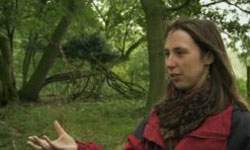
Wildlife film maker Rebecca Hosking investigates how to transform her family\'s farm in Devon into a low energy farm for the future, and discovers that nature holds the key.
- TV-Recordings
- Biology
- Environmental Studies
- TV-Recordings
- No subtitles
- 50
Wildlife film maker Rebecca Hosking investigates how to transform her family\'s farm in Devon into a low energy farm for the future, and discovers that nature holds the key.

Cork producer and wildlife enthusiast Francisco Garrett explains what will be lost if cork stoppers are replaced by plastic or screwtops.
- TV-Recordings
- Biology
- TV-Recordings
- No subtitles
- 50
Cork producer and wildlife enthusiast Francisco Garrett explains what will be lost if cork stoppers are replaced by plastic or screwtops.

Botswana\'s elephants are doing very well, too well perhaps. People are worried that too many elephants will damage their fragile desert home and have suggested that up to 60,000 should be culled. Researcher Mike Chase studies ancient elephant migration routes - he has tracked them across vast deserts, desolate salt pans, and Angolan minefields. Now he thinks he has a plan that could safeguard their future.
- TV-Recordings
- Biology
- Environmental Studies
- TV-Recordings
- No subtitles
- 50
Botswana\'s elephants are doing very well, too well perhaps. People are worried that too many elephants will damage their fragile desert home and have suggested that up to 60,000 should be culled. Researcher Mike Chase studies ancient elephant migration routes - he has tracked them across vast deserts, desolate salt pans, and Angolan minefields. Now he thinks he has a plan that could safeguard their future.
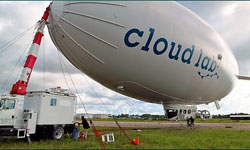
A team of scientists take to the skies in one of the world\'s largest airships, for a unique exploration of Earth\'s most precious and mysterious environment - the atmosphere.
- TV-Recordings
- Environmental Studies
- English subtitles
- 60
A team of scientists take to the skies in one of the world\'s largest airships, for a unique exploration of Earth\'s most precious and mysterious environment - the atmosphere.
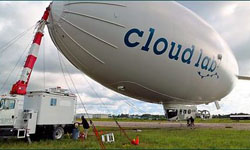
Continuing their journey across the USA in one of the world\\\'s largest airships, the team questions how the atmosphere changes with altitude and how that has an impact on the life found there.
- TV-Recordings
- Environmental Studies
- English subtitles
- 60
Continuing their journey across the USA in one of the world\\\'s largest airships, the team questions how the atmosphere changes with altitude and how that has an impact on the life found there.
-
Our Planet from the Air: Home
-
Luc Besson
Featuring stunning aerial footage from 54 countries, this film from acclaimed aerial photographer Yann Arthus-Bertrand and ecology-minded French director Luc Besson reveals the beauty and fragility of our planet as never before.
- TV-Recordings
- Natural World
- English subtitles
- 90
Featuring stunning aerial footage from 54 countries, this film from acclaimed aerial photographer Yann Arthus-Bertrand and ecology-minded French director Luc Besson reveals the beauty and fragility of our planet as never before.

Most of our water comes from rivers, and environmentalists fear we are pushing some of them and the wildlife they support to the edge. With many of Britain's rivers at the limit of what can sustainably be taken from them, Simon Boazman investigates whether the water industry and its regulators are doing enough to protect the nation's rivers.
- TV-Recordings
- Environmental Studies
- Other
- TV-Recordings
- English subtitles
- 30
Most of our water comes from rivers, and environmentalists fear we are pushing some of them and the wildlife they support to the edge. With many of Britain's rivers at the limit of what can sustainably be taken from them, Simon Boazman investigates whether the water industry and its regulators are doing enough to protect the nation's rivers.
Six months on from one of the world's most devastating tsunamis, Panorama's Paul Kenyon returns to Japan to hear remarkable tales of survival amid the epic destruction.
- TV-Recordings
- Environmental Studies
- Geography
- TV-Recordings
- English subtitles
- 30
Six months on from one of the world's most devastating tsunamis, Panorama's Paul Kenyon returns to Japan to hear remarkable tales of survival amid the epic destruction.

-
State of the Planet
-
David Attenborough
David Attenborough investigates arguably the most important issue of the 21st century - the future of life on Earth
- TV-Recordings
- No subtitles
- 180
David Attenborough investigates arguably the most important issue of the 21st century - the future of life on Earth
-
State of the Planet - 01
-
David Attenborough
David Attenborough investigates arguably the most important issue of the 21st century - the future of life on Earth
- TV-Recordings
- Biology
- Environmental Studies
- TV-Recordings
- No subtitles
- 58
David Attenborough investigates arguably the most important issue of the 21st century - the future of life on Earth

-
State of the Planet - 02
-
David Attenborough
David Attenborough investigates arguably the most important issue of the 21st century - the future of life on Earth
- TV-Recordings
- Biology
- Environmental Studies
- TV-Recordings
- No subtitles
- 58
David Attenborough investigates arguably the most important issue of the 21st century - the future of life on Earth

-
State of the Planet - 03
-
David Attenborough
David Attenborough investigates arguably the most important issue of the 21st century - the future of life on Earth
- TV-Recordings
- Biology
- Environmental Studies
- TV-Recordings
- No subtitles
- 58
David Attenborough investigates arguably the most important issue of the 21st century - the future of life on Earth
-
Storyville - Expedition to the End of the World
-
Daniel Dencik
Documentary which follows the journey of a group of scientists and artists as they venture by ship into one of the last uncharted territories on Earth.
- TV-Recordings
- Environmental Studies
- TV-Recordings
- English subtitles
- 60
Documentary which follows the journey of a group of scientists and artists as they venture by ship into one of the last uncharted territories on Earth.
Nominated for a 2011 Academy Award, this documentary tells the remarkable story of a young American environmentalist involved with the Earth Liberation Front - a group the FBI came to describe as America's 'number one domestic terrorism threat'.
- TV-Recordings
- Environmental Studies
- Politics & Public Policy
- TV-Recordings
- No subtitles
- 80
Nominated for a 2011 Academy Award, this documentary tells the remarkable story of a young American environmentalist involved with the Earth Liberation Front - a group the FBI came to describe as America's 'number one domestic terrorism threat'.

-
The Blue Planet
-
BBC
David Attenborough narrates a natural history of the oceans
- TV-Recordings
- No subtitles
- No
David Attenborough narrates a natural history of the oceans

Wildlife documentary looking in particular at the elusive Blue whale, and following a Grey Whale and her newborn calf as they are pursued by Killer whales
- TV-Recordings
- Biology
- Environmental Studies
- TV-Recordings
- No subtitles
- 46
Wildlife documentary looking in particular at the elusive Blue whale, and following a Grey Whale and her newborn calf as they are pursued by Killer whales
2007. A thousand metres down, in the twilight zone, animals play a constant game of hide and seek.
- TV-Recordings
- Biology
- Environmental Studies
- TV-Recordings
- No subtitles
- 46
2007. A thousand metres down, in the twilight zone, animals play a constant game of hide and seek.

2007. An unfortunate shoal of sardines is first attacked by three-metre-long striped marlin with metre-long, needle-sharp javelins on their heads. The commotion attracts juvenile yellowfin tuna and then a 14-metre Sei whale scoops up the remains.
- TV-Recordings
- Biology
- Environmental Studies
- TV-Recordings
- No subtitles
- 46
2007. An unfortunate shoal of sardines is first attacked by three-metre-long striped marlin with metre-long, needle-sharp javelins on their heads. The commotion attracts juvenile yellowfin tuna and then a 14-metre Sei whale scoops up the remains.
2007. In winter the temperature drops to below -50 degrees centigrade and in Antarctica most animals escape the weather. But emperor penguins stay put and huddle together, incubating their eggs and rearing their chicks in the worst weather on the planet. Weddell seals also remain, keeping their breathing holes open by scraping away the ice with their teeth.
- TV-Recordings
- Biology
- Environmental Studies
- TV-Recordings
- No subtitles
- 46
2007. In winter the temperature drops to below -50 degrees centigrade and in Antarctica most animals escape the weather. But emperor penguins stay put and huddle together, incubating their eggs and rearing their chicks in the worst weather on the planet. Weddell seals also remain, keeping their breathing holes open by scraping away the ice with their teeth.
This next instalment is about coral reefs, which are so crowded that they play host to a perpetual battle for space, even among the coral itself. It starts life as a larva that becomes a polyp. Having multiplied, it hardens into a limestone skeleton and grows to form a reef. As the community flourishes, animals develop relationships with one another and such a place can feature a huge variety of ocean life.
- TV-Recordings
- Biology
- Environmental Studies
- TV-Recordings
- No subtitles
- 11
This next instalment is about coral reefs, which are so crowded that they play host to a perpetual battle for space, even among the coral itself. It starts life as a larva that becomes a polyp. Having multiplied, it hardens into a limestone skeleton and grows to form a reef. As the community flourishes, animals develop relationships with one another and such a place can feature a huge variety of ocean life.
This programme surveys the effects of the seasons on the world's temperate seas — the most productive on Earth.
- TV-Recordings
- Biology
- Environmental Studies
- TV-Recordings
- No subtitles
- 11
This programme surveys the effects of the seasons on the world's temperate seas — the most productive on Earth.
2007. A huge tidal wave, sweeps 200 miles inland up the River Amazon. It's an event that only happens on key days each month, when the moon and sun combine their gravitational pull to maximum effect. The force of the wave shatters immense rainforest trees.
- TV-Recordings
- Biology
- Environmental Studies
- TV-Recordings
- No subtitles
- 46
2007. A huge tidal wave, sweeps 200 miles inland up the River Amazon. It's an event that only happens on key days each month, when the moon and sun combine their gravitational pull to maximum effect. The force of the wave shatters immense rainforest trees.
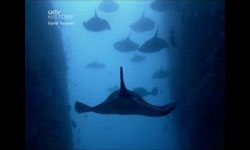
2007. Each year the entire population of green turtles that live off the coast of Brazil undertakes a massive 5,000-mile migration to the tiny seven-mile-wide island of Ascension, lost in the middle of the Atlantic.
- TV-Recordings
- Biology
- Environmental Studies
- TV-Recordings
- No subtitles
- 46
2007. Each year the entire population of green turtles that live off the coast of Brazil undertakes a massive 5,000-mile migration to the tiny seven-mile-wide island of Ascension, lost in the middle of the Atlantic.
-
The Perfect Disaster - Super Tornado
-
Channel Five
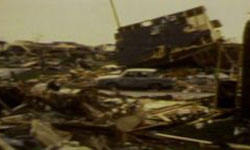
A documentary series in which expert scientific testimony and stunning CGI visuals combine to create the most realistic perfect storms imaginable. This edition speculates on what could happen if a mega-tornado were to strike.
- TV-Recordings
- Environmental Studies
- Geography
- TV-Recordings
- No subtitles
- 59
A documentary series in which expert scientific testimony and stunning CGI visuals combine to create the most realistic perfect storms imaginable. This edition speculates on what could happen if a mega-tornado were to strike.

-
The Secret Life of Waves
-
David Malone
Documentary-maker David Malone delves into the secrets of ocean waves. In an elegant and original film he finds that waves are not made of water, that some waves travel sideways and that the sound of the ocean comes not from water but from bubbles.
- TV-Recordings
- Environmental Studies
- Other
- TV-Recordings
- English subtitles
- 60
Documentary-maker David Malone delves into the secrets of ocean waves. In an elegant and original film he finds that waves are not made of water, that some waves travel sideways and that the sound of the ocean comes not from water but from bubbles.
-
The Year the Earth Went Wild
-
Channel 4
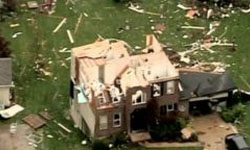
2011 has been a year of epic-scale climate and geological events across the world. This film looks back on a year of natural disasters, all caught on camera in spectacular fashion.
- TV-Recordings
- Environmental Studies
- Other
- TV-Recordings
- No subtitles
- 47
2011 has been a year of epic-scale climate and geological events across the world. This film looks back on a year of natural disasters, all caught on camera in spectacular fashion.
-
This World - Inside the Meltdown
-
Dan Edge
International investigative documentary series. When a tsunami struck Japan in 2011, it swamped the Fukushima nuclear complex causing nuclear meltdown and releasing radiation that ultimately would leave hundreds of square miles uninhabitable, and cost a hundred thousand people.
- TV-Recordings
- Environmental Studies
- Other
- TV-Recordings
- No subtitles
- 60
International investigative documentary series. When a tsunami struck Japan in 2011, it swamped the Fukushima nuclear complex causing nuclear meltdown and releasing radiation that ultimately would leave hundreds of square miles uninhabitable, and cost a hundred thousand people.

Fracking has become a national debate in Britain and it’s one the Government are determined to win. With an estimated 1,300 trillion cubic feet of shale gas lying underneath Britain, just a tenth of which could supply our energy needs for over 40 years, it is seen by many as an opportunity which is too good to miss.But what is the environmental cost?
- TV-Recordings
- Economics & Finance
- English subtitles
- 24
Fracking has become a national debate in Britain and it’s one the Government are determined to win. With an estimated 1,300 trillion cubic feet of shale gas lying underneath Britain, just a tenth of which could supply our energy needs for over 40 years, it is seen by many as an opportunity which is too good to miss.But what is the environmental cost?